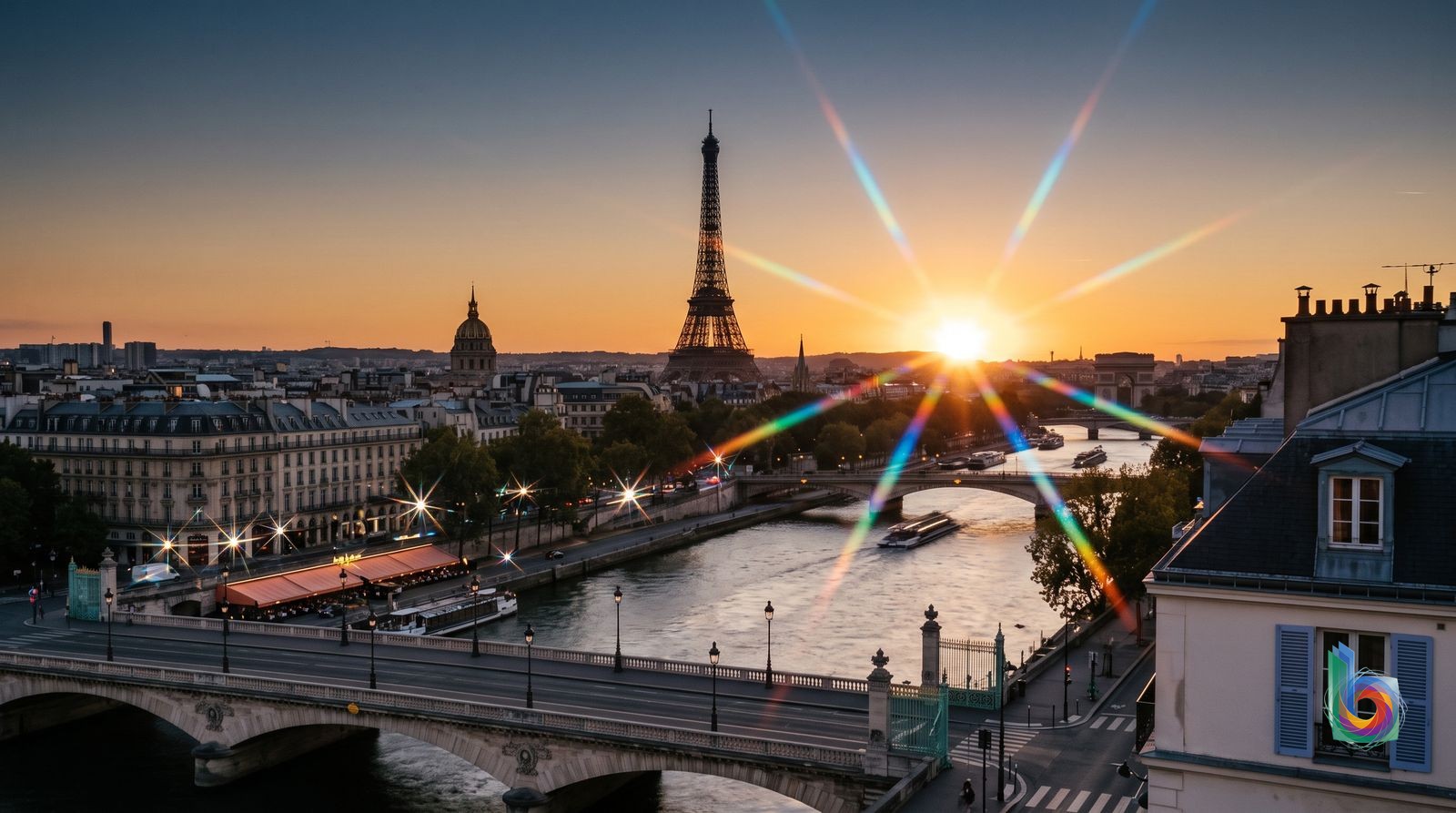
The Eiffel Tower, Arc de Triomphe, Notre-Dame and the monumental Seine riverfront · The Louvre, Musée d’Orsay, Sainte-Chapelle and an absurd depth of art collections · Haussmann boulevards, café culture, pâtisserie, haute cuisine and serious everyday food markets · Fashion, design and luxury houses including Chanel, Dior and Guerlain
Paris is a compact municipal core of about 2 million people sitting inside a vast, working Île-de-France metropolis of roughly 13 million: a capital of state power, art, fashion, food, universities and daily urban life, not an open-air museum. The trap is treating the Eiffel Tower–Louvre–Montmartre circuit as the whole city; it is spectacular, but it is also crowded, expensive and engineered for visitors. Paris rewards a selective plan—one major museum or timed monument, one neighbourhood on foot, and time to eat or simply walk—far more than a frantic checklist.
The mental map
The Seine is the first useful divider: the Right Bank is generally north of it, denser with grand boulevards, the Marais, the Louvre and Montmartre; the Left Bank holds the Latin Quarter, Saint-Germain, Luxembourg and the Eiffel Tower side. Inside the Boulevard Périphérique, Paris is divided into 20 arrondissements that spiral clockwise from the 1st around the Louvre; the single-digit arrondissements are the visitor core, while the outer ones are where the city feels more residential. Métro lines 1 and 14 are useful east–west spines; RER lines cut through the centre but are primarily regional rail, not a scenic substitute for walking.
Pacing
Plan two substantial sights at most in a full day—usually one timed, capacity-limited landmark such as the Eiffel Tower, Louvre, Sainte-Chapelle or Catacombs, plus one museum, district or long walk. Distances look short but museum collections are huge, security and timed-entry queues consume time, and the most famous sites are concentrated enough to tempt bad overbooking.
Numbered pins are the top sights — tap one for details.
It is Paris's essential skyline symbol, and the experience is strongest when treated as a view rather than a whole-day project. Reserve a timed ascent, then use the Champ-de-Mars/Trocadéro area for the classic exterior views.
The restored Gothic cathedral is a defining Paris landmark and anchors an excellent walk through the Île de la Cité and Latin Quarter. Go inside, then appreciate the exterior and river setting rather than trying to turn the visit into a lengthy stop.
The Louvre is not just a Mona Lisa stop: it is one of the world's great collections, in a former royal palace that rewards a focused route. Pick one or two wings or periods, because attempting the whole museum produces diminishing returns.
Its rooftop delivers one of Paris's clearest views, with the grand avenues radiating below and the Eiffel Tower in the distance. The monument itself is brief; use it as the high point of a Champs-Élysées walk rather than a standalone expedition.
For many first-timers, this is Paris's most manageable great art museum: an exceptional Impressionist and Post-Impressionist collection in a former railway station. Prioritize the top-floor paintings and leave time for the building and Seine-facing clock views.
Come for the hilltop panorama and the contrast with central Paris, then wander beyond the immediate tourist crush into Montmartre's lanes. The basilica interior is free, but the neighborhood works best early or after most day-trippers leave.
Where to stay
First visit? Stay in Le Marais.
Le Marais gives a first-time visitor the best balance of central walks, strong Métro access, real evening life and proximity to Notre-Dame, the Seine, Pompidou and the Louvre. It is busy and pricey, but less sterile than the Louvre hotel zone and more lively at night than the 7th.
Where to eat
Tables worth crossing town for
Costs nothing
Free and great
Walk the Seine from Île Saint-Louis and Notre-Dame west through the booksellers and riverbanks toward the Louvre; the UNESCO-listed setting is the Paris people pay river cruises to see.
Climb through Montmartre to Sacré-Cœur for the city panorama, then leave Place du Tertre quickly and walk the side streets. Entry to the basilica is free; the dome is not.
Spend an hour in the Jardin du Luxembourg or the Tuileries. They are proper Paris public rooms, not merely breaks between paid attractions.
Visit Père-Lachaise Cemetery: free, atmospheric and large enough to deserve an unhurried wander rather than a grave-hunting sprint.
Visit the permanent collections at Musée Carnavalet, the Paris history museum, and the Mémorial de la Shoah; both are meaningful free indoor stops.
See Notre-Dame from the Île de la Cité and, where access permits, enter the cathedral without paying; reserve paid time for places where an interior ticket adds something genuinely irreplaceable.
Use the first Sunday of the month for national museums and monuments where free admission applies—but expect queues and verify the institution’s current rules before building the day around it.
Go to the Galeries Lafayette Haussmann rooftop for a free central skyline view; it is not tranquil, but it is a useful no-ticket alternative to paid observation decks.
The Eiffel Tower, Arc de Triomphe, Notre-Dame and the monumental Seine riverfront · The Louvre, Musée d’Orsay, Sainte-Chapelle and an absurd depth of art collections · Haussmann boulevards, café culture, pâtisserie, haute cuisine and serious everyday food markets · Fashion, design and luxury houses including Chanel, Dior and Guerlain
Paris is a compact municipal core of about 2 million people sitting inside a vast, working Île-de-France metropolis of roughly 13 million: a capital of state power, art, fashion, food, universities and daily urban life, not an open-air museum. The trap is treating the Eiffel Tower–Louvre–Montmartre circuit as the whole city; it is spectacular, but it is also crowded, expensive and engineered for visitors. Paris rewards a selective plan—one major museum or timed monument, one neighbourhood on foot, and time to eat or simply walk—far more than a frantic checklist.
The mental map
The Seine is the first useful divider: the Right Bank is generally north of it, denser with grand boulevards, the Marais, the Louvre and Montmartre; the Left Bank holds the Latin Quarter, Saint-Germain, Luxembourg and the Eiffel Tower side. Inside the Boulevard Périphérique, Paris is divided into 20 arrondissements that spiral clockwise from the 1st around the Louvre; the single-digit arrondissements are the visitor core, while the outer ones are where the city feels more residential. Métro lines 1 and 14 are useful east–west spines; RER lines cut through the centre but are primarily regional rail, not a scenic substitute for walking.
Pacing
Plan two substantial sights at most in a full day—usually one timed, capacity-limited landmark such as the Eiffel Tower, Louvre, Sainte-Chapelle or Catacombs, plus one museum, district or long walk. Distances look short but museum collections are huge, security and timed-entry queues consume time, and the most famous sites are concentrated enough to tempt bad overbooking.
Numbered pins are the top sights — tap one for details.
It is Paris's essential skyline symbol, and the experience is strongest when treated as a view rather than a whole-day project. Reserve a timed ascent, then use the Champ-de-Mars/Trocadéro area for the classic exterior views.
The restored Gothic cathedral is a defining Paris landmark and anchors an excellent walk through the Île de la Cité and Latin Quarter. Go inside, then appreciate the exterior and river setting rather than trying to turn the visit into a lengthy stop.
The Louvre is not just a Mona Lisa stop: it is one of the world's great collections, in a former royal palace that rewards a focused route. Pick one or two wings or periods, because attempting the whole museum produces diminishing returns.
Its rooftop delivers one of Paris's clearest views, with the grand avenues radiating below and the Eiffel Tower in the distance. The monument itself is brief; use it as the high point of a Champs-Élysées walk rather than a standalone expedition.
For many first-timers, this is Paris's most manageable great art museum: an exceptional Impressionist and Post-Impressionist collection in a former railway station. Prioritize the top-floor paintings and leave time for the building and Seine-facing clock views.
Come for the hilltop panorama and the contrast with central Paris, then wander beyond the immediate tourist crush into Montmartre's lanes. The basilica interior is free, but the neighborhood works best early or after most day-trippers leave.
Where to stay
First visit? Stay in Le Marais.
Le Marais gives a first-time visitor the best balance of central walks, strong Métro access, real evening life and proximity to Notre-Dame, the Seine, Pompidou and the Louvre. It is busy and pricey, but less sterile than the Louvre hotel zone and more lively at night than the 7th.
Where to eat
Tables worth crossing town for
Costs nothing
Free and great
Walk the Seine from Île Saint-Louis and Notre-Dame west through the booksellers and riverbanks toward the Louvre; the UNESCO-listed setting is the Paris people pay river cruises to see.
Climb through Montmartre to Sacré-Cœur for the city panorama, then leave Place du Tertre quickly and walk the side streets. Entry to the basilica is free; the dome is not.
Spend an hour in the Jardin du Luxembourg or the Tuileries. They are proper Paris public rooms, not merely breaks between paid attractions.
Visit Père-Lachaise Cemetery: free, atmospheric and large enough to deserve an unhurried wander rather than a grave-hunting sprint.
Visit the permanent collections at Musée Carnavalet, the Paris history museum, and the Mémorial de la Shoah; both are meaningful free indoor stops.
See Notre-Dame from the Île de la Cité and, where access permits, enter the cathedral without paying; reserve paid time for places where an interior ticket adds something genuinely irreplaceable.
Use the first Sunday of the month for national museums and monuments where free admission applies—but expect queues and verify the institution’s current rules before building the day around it.
Go to the Galeries Lafayette Haussmann rooftop for a free central skyline view; it is not tranquil, but it is a useful no-ticket alternative to paid observation decks.